学歴
B.Eng. Intelligent Systems Design
HSHL / 大学
Programme Focus
Communicating online all day long and everywhere, operating devices without touching them, closing the shutters at home via an app while away from home, checking the content of the fridge online, securing a parking space with a power charging station for the electric car outside the 3D cinema thanks to valet parking, and, when you enter the pleasantly air-conditioned loft in the evening, soft light welcomes you and the food ordered online during the day was already delivered in an ice box. Besides imagination and vision, the time factor plays an important role for the further development of new intelligent systems and their integration into the environment: in other words, speed to get products and applications ready for the market. In this process, algorithms are the basis, while programming, simulation processes, modelling, prototyping, and design are the tools.
The degree course
All of these are important aspects in the Intelligent Systems Design degree course, which prepares students in lectures, seminars and practical courses (some of which are held in English) for an international employment in software development, mobile computing, mechanical engineering, in the production of electrical appliance, medical engineering, in the automotive or aerospace industry and in the communications or energy sector in particular. The study program imparts fundamentals of computer sciences with an interdisciplinary approach and directly relates them to the application. Practical modules, a practical semester and project work prepare the students for their professional life. Another important aspect during the studies is the subject of business formation as an option after the bachelor's degree.
Thesis
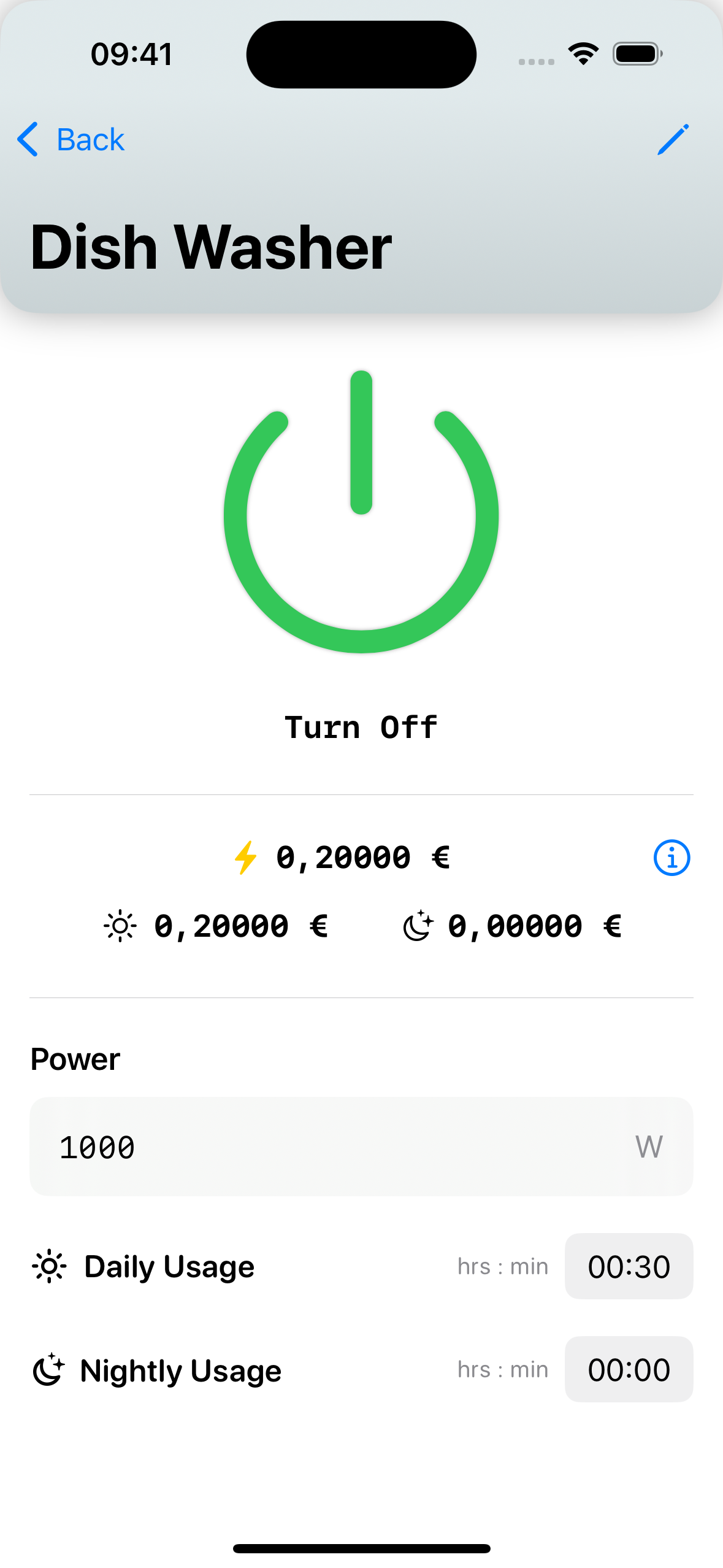
Design and Development of a SwiftUI Application for Managing and Tracking Household Electricity Consumption and Cost This bachelor thesis presents the design and development of a SwiftUI application for managing and tracking household electricity consumption and cost. The project aims to address the growing need for efficient energy management in the face of rising costs and environmental concerns.
The application provides users with real-time insights into their electricity usage, integrates dynamic pricing data, and offers personalized recommendations for reducing energy consumption. Key features include detailed breakdowns of energy usage by appliance, customizable tracking options, and actionable cost-saving insights.
The thesis outlines the background and motivation for the project, reviews existing energy management solutions, and identifies gaps in current offerings. It then details the methodology used, including stakeholder analysis, user persona development, and journey mapping. The app's architecture and design process are described, with a focus on leveraging SwiftUI's capabilities for creating an intuitive and responsive user interface.
The implementation phase covers the development process, data management strategies, and integration with external APIs. Testing and validation procedures are outlined, including unit testing, UI testing, and user acceptance testing. Results and discussion sections analyze the app's effectiveness in promoting energy-efficient behaviors and its impact on user consumption patterns.
The thesis concludes by summarizing key findings and suggesting areas for future research and development in household energy management applications.
Grade: 1.0 GitHub
Relevant Coursework
- Cyber Security
- Embedded Systems
- Mobile Computing
- Computer Security
- Artificial Intelligence
- Corporate Management
- Embedded Systems
- System Modelling